Mastering Potty Training: A 7-Day Action Plan for Busy Parents
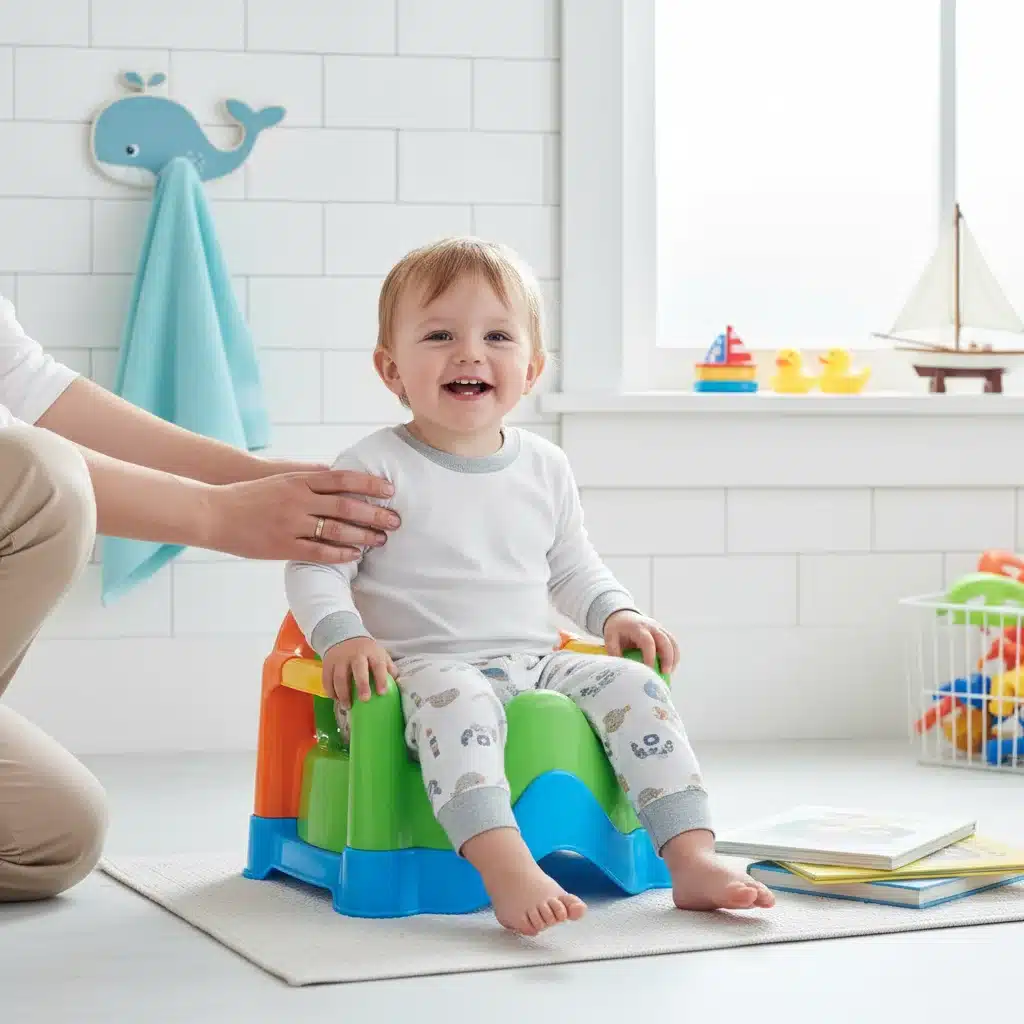
As busy parents, the idea of potty training can often feel like a daunting task, a significant milestone that brings with it a mix of excitement and apprehension. The thought of dedicating weeks, or even months, to this process can be overwhelming, especially when juggling work, other children, and daily responsibilities. However, what if we told you that with the right strategy, preparation, and mindset, you could significantly accelerate this journey? What if you could achieve substantial progress, even independence, in just potty training 7 days?
This comprehensive guide is designed specifically for you – the busy parent seeking an efficient yet effective approach to potty training. We understand that time is a precious commodity, and our goal is to provide you with a realistic, step-by-step action plan that maximizes your efforts and minimizes stress for both you and your child. We’ll delve into the crucial preparatory steps, daily routines, effective communication strategies, and troubleshooting tips that will empower you to navigate this important developmental stage with confidence and achieve success within a focused timeframe. By following this 7-day framework, you’ll not only guide your child towards potty independence but also foster a positive and supportive learning environment that sets them up for future success.
Forget the myths about prolonged potty training processes. While every child is unique, a concentrated, consistent, and positive approach can yield remarkable results. This plan isn’t about rushing your child, but rather about creating an immersive and encouraging experience that helps them connect the dots quickly. Let’s embark on this journey together, transforming what might seem like a monumental challenge into a manageable and rewarding experience for your entire family. Get ready to embrace a week of focused effort that will lead to lasting independence and fewer diaper changes!
Understanding Readiness: The Foundation for Successful Potty Training in 7 Days
Before you even think about starting your intense potty training 7 days program, the single most critical factor for success is ensuring your child is truly ready. Attempting to potty train a child who isn’t developmentally prepared can lead to frustration, setbacks, and a longer, more arduous process. Readiness isn’t solely about age; it’s a combination of physical, cognitive, and emotional indicators. Observing these signs will save you immense time and effort in the long run.
Physical Readiness Indicators:
- Dry for Longer Periods: Your child stays dry for at least 2 hours during the day or wakes up dry from naps. This indicates their bladder muscles are developing better control.
- Predictable Bowel Movements: They have regular, predictable bowel movements, often at similar times each day.
- Motor Skills: They can walk to the bathroom, pull down their pants, and pull them back up again with minimal assistance. This independence is key.
Cognitive Readiness Indicators:
- Understanding and Following Instructions: Your child can follow simple two-step instructions, like “Go get your toy” or “Put your cup on the table.”
- Communicating Needs: They can communicate that they need to go to the bathroom, either verbally (e.g., “Potty,” “Pee-pee”) or non-verbally (e.g., pointing, specific facial expressions, wiggling).
- Awareness of Bodily Functions: They show awareness of having a wet or dirty diaper and may express discomfort. They might even hide to pee or poop.
Emotional Readiness Indicators:
- Desire for Independence: Your child expresses a desire to do things themselves, mimicking adults or older siblings.
- Interest in the Potty: They show curiosity about the toilet or potty chair, perhaps wanting to sit on it or watch others use it.
- Seeking Approval: They look for praise and encouragement for their accomplishments.
- Resistance to Diapers: They may start pulling off wet or dirty diapers, indicating discomfort and a preference for being clean and dry.
It’s important to remember that most children exhibit these signs between 18 months and 3 years old, but there’s a wide range of normal. Pushing a child before they are ready can create negative associations with the potty and make the process much harder. Take a few days to observe your child closely. If you see most of these signs consistently, then you’re ready to move forward with your intensive potty training 7 days plan.
Gathering Your Potty Training Arsenal: Essential Supplies for the 7-Day Challenge
Preparation is paramount for a successful and smooth potty training 7 days experience. Having all your supplies ready before you begin will eliminate last-minute scrambling and allow you to focus entirely on your child. Think of it as setting the stage for a week of dedicated learning and positive reinforcement. Here’s a checklist of what you’ll need:
The Potty Gear:
- Potty Chair or Seat Reducer: Decide which works best for your child. A standalone potty chair allows them to sit with their feet on the ground, making them feel secure. A seat reducer fits on a regular toilet, which can be good for mimicking adult behavior, but ensure it comes with a sturdy step stool so their feet are supported.
- Step Stool: Essential for reaching the sink to wash hands, and for providing foot support if using a seat reducer on a regular toilet.
Clothing and Cleanup:
- Plenty of Easy-to-Remove Clothing: Stock up on pants, shorts, and skirts with elastic waistbands that your child can easily pull up and down themselves. Avoid overalls, complicated buttons, or zippers during this week.
- Underwear: Let your child pick out their own “big kid” underwear. This often provides a huge motivational boost. Have at least 7-10 pairs readily available for accidents.
- Cleaning Supplies: Keep paper towels, disinfectant wipes, and a child-safe cleaner handy for quick accident cleanups.
- Waterproof Mattress Protector: An absolute must for protecting their bed during naps and nighttime, even if you’re only focusing on daytime potty training initially.
Motivation and Education:
- Potty Training Books/Videos: Age-appropriate resources that normalize the potty training process and make it fun.
- Reward System: Small, tangible rewards work wonders. Think stickers, small toys, special treats (e.g., a single M&M, a small cracker), or even a sticker chart that leads to a bigger prize.
- Positive Reinforcement Phrases: Prepare a mental list of encouraging words and phrases. “Great job trying!” “You almost made it!” “I know you can do it!”
Creating the Right Environment:
- Designated Potty Spot: Place the potty chair in an easily accessible location, either in the bathroom or temporarily in a play area during the initial days.
- Comfort and Entertainment: Make the potty area inviting. You might have a few books or small toys nearby to keep them occupied for a short period if they need to sit and wait.
By gathering these supplies beforehand, you’re not just preparing materials; you’re mentally preparing yourself and creating a dedicated space for this important developmental leap. This level of readiness is a cornerstone of our effective potty training 7 days plan.
The 7-Day Potty Training Action Plan: A Daily Breakdown
This is where the rubber meets the road. Our potty training 7 days plan is structured to provide an intensive, immersive experience for your child. Consistency and positive reinforcement are your greatest tools. Remember, this is a general guideline; adapt it to your child’s pace and personality.
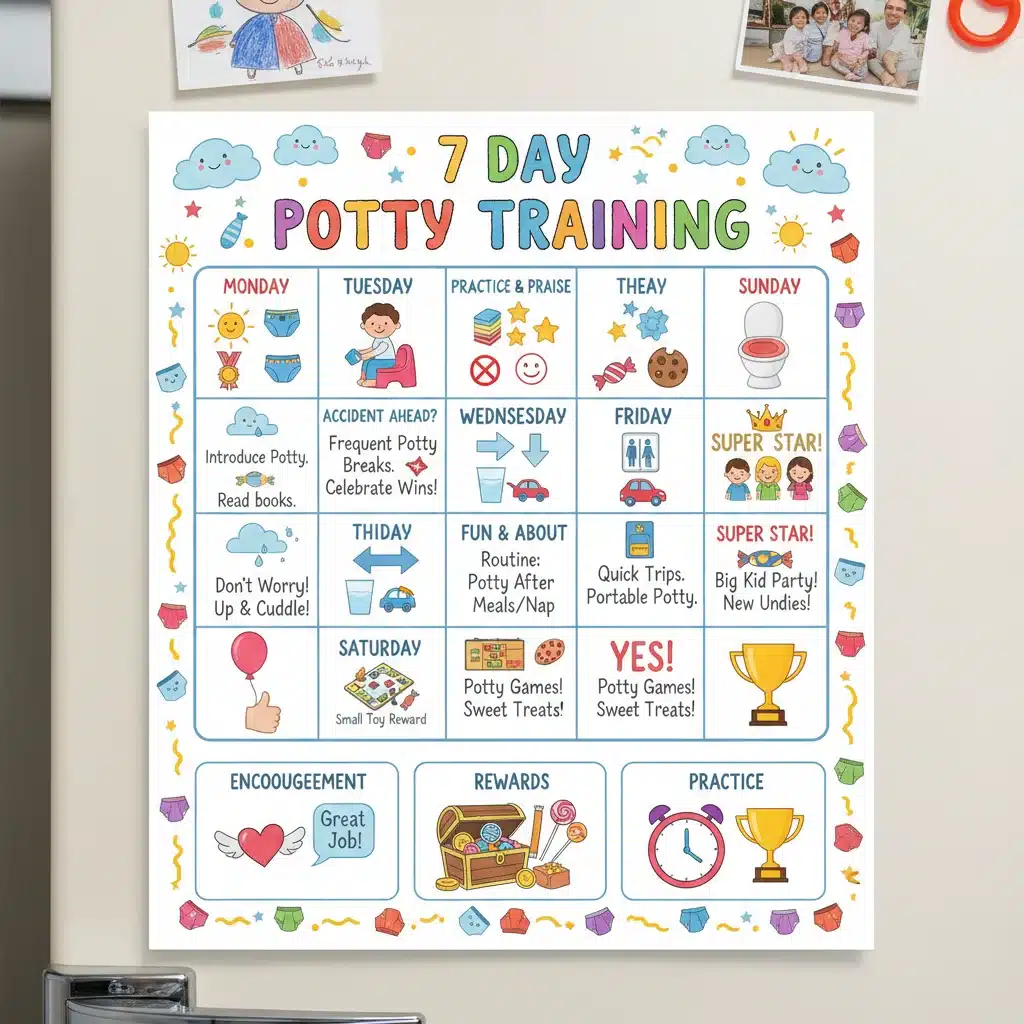
Day 1: The Potty Immersion Day
- Morning: Wake up, immediately remove the diaper, and put on underwear. Explain that today is a “no-diaper day.” Have your child sit on the potty every 15-20 minutes for a few minutes, even if nothing happens.
- Throughout the Day: Offer plenty of fluids. Watch for signs they need to go (squirming, holding themselves). When you see a sign, calmly guide them to the potty. Celebrate every success, no matter how small, with enthusiasm and a small reward.
- Accidents: Expect them! When an accident happens, calmly say, “Oops, pee (or poop) goes in the potty.” Help them clean up and change into fresh underwear. Avoid punishment or shaming.
- Evening: Acknowledge their brave efforts. Put a diaper on for bedtime, explaining that it’s for sleeping.
Day 2: Reinforcing the Connection
- Morning: Repeat the routine from Day 1. The goal today is to help them connect the physical sensation with the act of going to the potty.
- Throughout the Day: Increase the time between potty breaks slightly if they are having success (e.g., every 20-30 minutes). Continue to offer fluids and watch for cues.
- Positive Reinforcement: Be overly enthusiastic about successes. Use your reward system consistently.
- Accidents: Continue with calm, factual responses. Focus on the learning opportunity.
Day 3: Taking Initiative
- Morning: Encourage your child to tell you when they need to go rather than you constantly asking or prompting.
- Throughout the Day: Continue regular potty breaks, but also wait for them to initiate. If they don’t, gently remind them about the potty every 30-45 minutes.
- Outings: If you must go out, make it a short trip. Plan ahead and take them to the potty right before leaving and immediately upon returning. Bring extra clothes.
- Problem-Solving: If they are consistently having accidents, reassess. Are they truly ready? Are you being consistent enough?
Day 4: Consistency and Independence
- Morning: Continue to encourage self-initiation. Praise their independence.
- Throughout the Day: Extend the time between prompted potty breaks further (e.g., every hour), allowing more opportunities for them to recognize the need on their own.
- Public Restrooms: If comfortable, introduce them to a public restroom during a short outing. Explain how it’s different but still serves the same purpose.
- Review: At the end of the day, talk about the successes and any challenges. Reiterate your belief in their ability.
Day 5: Expanding the Potty Zone
- Morning: By now, your child should be showing more consistent control and self-initiation.
- Throughout the Day: Continue with regular checks and encouragement. If they are doing well, try a slightly longer outing. Always know where the nearest restroom is.
- Nighttime Prep (Optional): If your child has been consistently dry during naps, you might consider trying a night without a diaper, but only if they are highly motivated and you are prepared for potential accidents. This is often a separate, later stage of potty training.
Day 6: Generalization and Confidence Building
- Morning: Focus on building their confidence. Let them take the lead as much as possible.
- Throughout the Day: Encourage them to use the potty in different settings if possible (e.g., at a friend’s house, grandparent’s house).
- Role-Playing: Use dolls or stuffed animals to practice potty routines.
- Praise Effort: Even if there’s an accident, praise their effort to get to the potty.
Day 7: Celebrating Potty Independence!
- Morning: Review the week’s progress. Highlight all their achievements.
- Throughout the Day: Continue the routine with less prompting. Your child should be largely initiating trips to the potty.
- Celebration: Mark the end of your intensive potty training 7 days with a small celebration – a special treat, a new book, or a fun family activity. This reinforces the positive experience.
- Long-Term: Remember that accidents will still happen occasionally, especially during new situations or when they are tired or sick. Continue to be patient and supportive.
Effective Communication and Positive Reinforcement During Potty Training
The language you use and the way you respond to your child during this intense potty training 7 days period are just as important as the physical steps. Your attitude can significantly influence their willingness to cooperate and their overall success. Creating a positive and supportive environment is crucial for fostering confidence and reducing anxiety.
Speak Clearly and Positively:
- Use Simple Language: Stick to clear, consistent terms for urine and bowel movements that your child understands (e.g., “pee-pee,” “poop,” “potty”). Avoid overly complicated or negative language.
- Explain the Process: Before starting, talk about what’s going to happen. “Soon, you’ll be a big kid and use the potty like mommy/daddy.”
- Empower, Don’t Command: Instead of “Go to the potty now!” try “Do you need to go potty?” or “Let’s try the potty.” Giving them a sense of control can make a big difference.
The Power of Praise and Rewards:
- Specific Praise: Instead of just “Good job,” try “Great job telling me you needed to go potty!” or “Wow, you put all your pee-pee in the potty!” This helps them understand what they did well.
- Immediate Rewards: Deliver rewards immediately after they successfully use the potty. This strengthens the association between the action and the positive outcome.
- Tangible vs. Intangible: While stickers and small treats are effective tangible rewards, don’t underestimate the power of intangible rewards like high-fives, hugs, cheers, and special one-on-one time.
- Reward Effort, Not Just Success: If they sat on the potty and tried, even if nothing came out, praise their effort. “Thank you for trying the potty!”
Handling Accidents with Grace:
- Stay Calm: This is perhaps the most important rule. Yelling, shaming, or showing frustration will only create anxiety and resistance.
- Matter-of-Fact Tone: “Oops, it looks like you had an accident. Pee-pee goes in the potty. Let’s get you cleaned up.”
- Involve Them in Cleanup: Have them help (if age-appropriate) with a paper towel or by putting their wet clothes in a hamper. This teaches responsibility without punishment.
- Reassurance: Reassure them that it’s okay and they’ll get it next time. Remind them of their successes.
Consistency is Key:
- Everyone on Board: Ensure all caregivers (parents, grandparents, daycare providers) use the same language, routine, and reward system. Inconsistency can confuse your child.
- Routine: Stick to a consistent schedule for offering potty breaks and following through with the reward system. Predictability helps children feel secure and learn faster.
By focusing on positive reinforcement and clear, calm communication, you’re not just teaching a skill; you’re building your child’s self-esteem and fostering a positive relationship around their bodily functions. This empathetic approach is a cornerstone of our successful potty training 7 days methodology.
Troubleshooting Common Potty Training Challenges
Even with the best plan for potty training 7 days, you’re likely to encounter a few bumps along the road. This is completely normal! The key is to anticipate these challenges and have strategies in place to address them calmly and effectively. Here are some common hurdles and how to overcome them:
Challenge 1: Refusal to Sit on the Potty
- Possible Reasons: Fear (of falling in, of the flush, of the unknown), discomfort, power struggle, not ready.
- Solutions:
- Make it Fun: Let them decorate the potty chair. Read books on the potty. Sing songs.
- Ensure Comfort: Is the potty chair stable? Are their feet supported?
- Role Play: Have dolls or stuffed animals use the potty.
- Offer Choices: “Do you want to use the little potty or the big potty with the seat?” (if applicable).
- Don’t Force: If they resist strongly, take a break and try again later. Forcing can create negative associations.
Challenge 2: Frequent Accidents
- Possible Reasons: Not fully understanding body cues, too excited/distracted to notice, not going often enough, not fully ready.
- Solutions:
- More Frequent Potty Breaks: Revert to taking them every 15-20 minutes, especially on Day 1-3.
- Watch for Cues: Become a detective! Observe their body language closely (squirming, holding themselves, sudden quietness).
- Limit Distractions: During initial potty training efforts, minimize highly engaging activities that might make them forget their body’s signals.
- Review Readiness: If accidents are constant and they show no progress, it might be a sign they aren’t quite ready. Consider a short break (a few weeks) and try again.
Challenge 3: Holding Poop
- Possible Reasons: Fear of the sensation, fear of flushing, discomfort, past painful bowel movements.
- Solutions:
- Ensure Soft Stools: Increase fiber and water intake to prevent constipation.
- Address Fears: Talk about their concerns. Reassure them it won’t hurt. Let them flush the toilet themselves (or you flush after they leave the room if the sound frightens them).
- Privacy: Some children prefer privacy for bowel movements.
- Reward System: Offer a special reward specifically for pooping in the potty.
Challenge 4: Regression
- Possible Reasons: Stress (new sibling, moving, starting daycare), illness, change in routine, seeking attention.
- Solutions:
- Patience and Understanding: Regression is common. Don’t panic.
- Revert to Basics: Temporarily go back to more frequent prompts and consistent rewards.
- Identify the Cause: Try to figure out if there’s an underlying stressor and address it if possible.
- Avoid Shaming: Continue with calm, factual responses to accidents.
- Short Break: If it’s persistent, a short break from potty training might be beneficial, then restart with a fresh perspective.
Challenge 5: Nighttime Training
- Consideration: Nighttime dryness is a physiological milestone that often comes much later than daytime dryness, and some children aren’t ready until 5-7 years old or even later.
- Solutions:
- Don’t Rush It: Focus on daytime dryness first.
- Limit Fluids Before Bed: About an hour before bedtime.
- Potty Before Bed: Always have them try to go right before tucking in.
- Waterproof Mattress Protector: Essential if you decide to try without a diaper.
- Patience: This is a developmental stage that can’t always be rushed.
Remember, your child is learning a complex new skill. Your patience, consistency, and positive attitude are the most powerful tools you have to navigate these challenges and ensure a successful potty training 7 days experience, even if it extends slightly beyond the week.
Maintaining Potty Training Success Beyond the 7 Days
Successfully navigating your potty training 7 days intensive program is a huge accomplishment, but the journey doesn’t end on Day 7. The following weeks and months are crucial for solidifying their new skills and ensuring long-term potty independence. This phase is about transitioning from an intensive learning period to a natural, self-managed routine.
Consistency is Still Key:
- Continue the Routine: Maintain a consistent schedule for bathroom breaks, especially after waking up, before leaving the house, and before bedtime.
- Regular Reminders: While your child should be initiating more often, gentle reminders are still helpful, particularly when they are engrossed in play or during transitions. “Do you need to try the potty before we go to the park?”
- All Caregivers on Board: Ensure anyone caring for your child (grandparents, daycare, babysitters) is aware of and follows the established potty routine.
Phasing Out Rewards:
- Gradual Reduction: Over the next few weeks, gradually reduce the frequency and size of tangible rewards. Start by only rewarding for specific successes (e.g., pooping in the potty) or for a full day of dryness.
- Shift to Internal Motivation: Emphasize the positive feelings associated with being dry and independent. “Aren’t you proud of yourself for using the potty?” “Now you’re a big kid!”
- Verbal Praise Remains: Consistently offer verbal praise and encouragement. This never goes out of style!
Handling Accidents Post-7 Days:
- Expect Them: Accidents will happen. They are a normal part of the learning process, especially during times of stress, new environments, or illness.
- Remain Calm: Your reaction is still critical. Treat accidents matter-of-factly, without judgment or anger.
- Investigate (Briefly): Gently ask if they know why it happened. Sometimes they can identify a reason (e.g., “I was playing,” “I forgot”).
- Reaffirm the Rules: “Remember, pee-pee goes in the potty.”
Navigating Outings and Public Restrooms:
- Plan Ahead: Always know where the nearest restroom is when you’re out. Take them to the potty before leaving and upon arrival at your destination.
- Pack Essentials: Always carry a change of clothes, wipes, and a small plastic bag for wet items, just in case.
- Public Restroom Etiquette: Teach them about flushing, washing hands, and being respectful of public spaces.
Addressing Nighttime Dryness (Separately):
- Patience is Paramount: As mentioned, nighttime potty training is a different beast. Most children are not reliably dry at night until much later than they are during the day.
- Look for Signs: When your child consistently wakes up dry for several weeks, that’s a good sign they might be ready to try without a nighttime diaper or pull-up.
- Waterproof Protection: Continue to use a waterproof mattress protector for a long time, even after they seem reliably dry.
Empowering Your Child:
- Encourage Self-Care: Teach them to pull down their pants, wipe themselves, flush, and wash their hands independently.
- Give Them Ownership: Let them choose their underwear, help clean their potty chair (if applicable), and take pride in their growing independence.
By consistently applying these principles, you’ll ensure that the success achieved during your initial potty training 7 days becomes a permanent and positive part of your child’s development. It’s a journey, and you’ve given them a fantastic head start!
Conclusion: Embracing Potty Independence with Confidence
Navigating the world of potty training can indeed feel like a significant challenge for busy parents, but as we’ve explored, achieving substantial progress – even potty independence – within a focused potty training 7 days timeframe is not only possible but highly achievable with the right approach. This intensive plan is built on the pillars of readiness, meticulous preparation, consistent daily action, positive communication, and empathetic troubleshooting. By committing to this framework, you’ve not only guided your child through a crucial developmental milestone but have also fostered a sense of accomplishment and independence that will serve them well in many other aspects of their growth.
Remember, while the goal was a focused 7-day effort, the journey towards complete potty mastery is continuous. Accidents will occur, small setbacks might happen, and that’s perfectly normal. Your continued patience, unwavering support, and consistent reinforcement are the most powerful tools in ensuring long-term success. Celebrate every victory, big or small, and approach challenges with understanding and a problem-solving mindset. You’ve laid a strong foundation, and your child is now much better equipped to manage their bodily functions with confidence.
Embrace this new chapter of fewer diapers and greater independence! You’ve successfully tackled one of parenting’s biggest hurdles, proving that with a strategic plan and dedicated effort, even the busiest parents can achieve remarkable results. Here’s to a future of dry pants and proud smiles!