Building Emotional Intelligence: 4-Step Plan for Kids Aged 2-5
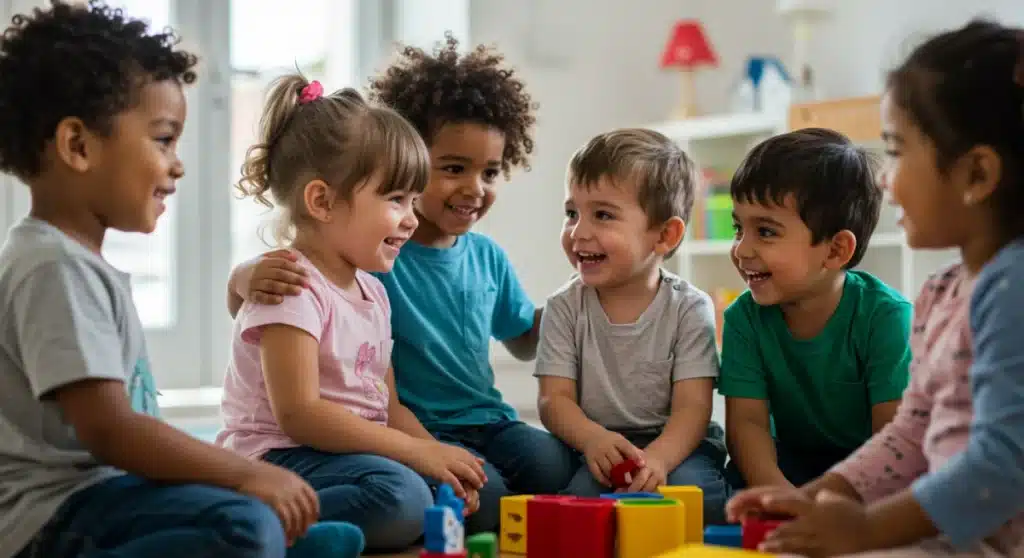
Developing emotional intelligence in young children aged 2-5 is crucial for their future well-being, and a structured 4-step plan implemented by 2025 can yield measurable progress within 90 days.
Are you wondering how to effectively nurture your child’s emotional growth? Understanding and managing feelings is a cornerstone of healthy development, and initiating this process early can make a profound difference. This article presents a comprehensive Building Emotional Intelligence: A 4-Step Plan for Children Aged 2-5 in 2025, Showing Measurable Progress by 90 Days, offering practical, actionable insights for parents aiming to empower their little ones with crucial emotional skills.
Understanding Emotional Intelligence in Early Childhood
Emotional intelligence, often abbreviated as EQ, refers to the ability to understand, use, and manage one’s own emotions in positive ways to relieve stress, communicate effectively, empathize with others, overcome challenges, and defuse conflict. For children aged 2-5, this looks like recognizing basic emotions, expressing feelings appropriately, and beginning to understand the feelings of those around them. It’s a foundational skill set that influences everything from social interactions to academic success.
In these formative years, children are rapidly developing their cognitive and social capacities. Their brains are incredibly malleable, making this period an optimal time to introduce and reinforce emotional concepts. Early intervention in emotional development can prevent many behavioral issues later on and foster resilience. Parents play a pivotal role as the primary educators in this domain, modeling healthy emotional responses and creating a supportive environment for exploration and expression.
Why focus on EQ now?
- Foundation for future success: High emotional intelligence correlates with better academic performance, stronger relationships, and increased life satisfaction.
- Improved social skills: Children with developed EQ can navigate friendships, resolve conflicts, and collaborate more effectively.
- Enhanced mental well-being: Understanding emotions helps children cope with stress, anxiety, and frustration in healthier ways.
- Reduced behavioral challenges: When children can express their feelings, they are less likely to resort to tantrums or aggression.
The emphasis on emotional intelligence isn’t just a trend; it’s a recognized necessity for thriving in an increasingly complex world. By equipping our children with these skills early, we are preparing them not just for school, but for life itself. This proactive approach ensures they have the internal tools to face challenges with confidence and empathy.
Step 1: Recognizing and Naming Emotions
The first critical step in building emotional intelligence is helping children identify and label their own emotions and those of others. Before a child can manage an emotion, they first must know what that emotion is. This stage involves providing a vocabulary for feelings and connecting those words to observable expressions and bodily sensations. It’s about making the abstract concept of emotion tangible for a young mind.
Parents can begin by consistently using emotion words in everyday conversations. For example, instead of just saying, “You’re upset,” try, “I see you’re feeling frustrated because your blocks fell.” This validates their experience and gives them the language to describe it. Picture books and games are excellent tools for this stage, offering visual cues that children can relate to their own experiences.
Practical activities for emotion recognition
- Emotion Charades: Act out different emotions and have your child guess what feeling you’re portraying. Then, switch roles.
- Feeling Faces: Use mirrors or drawing activities to explore how different emotions look on faces.
- Story Time Discussions: While reading, pause and ask, “How do you think the character is feeling right now? Why?”
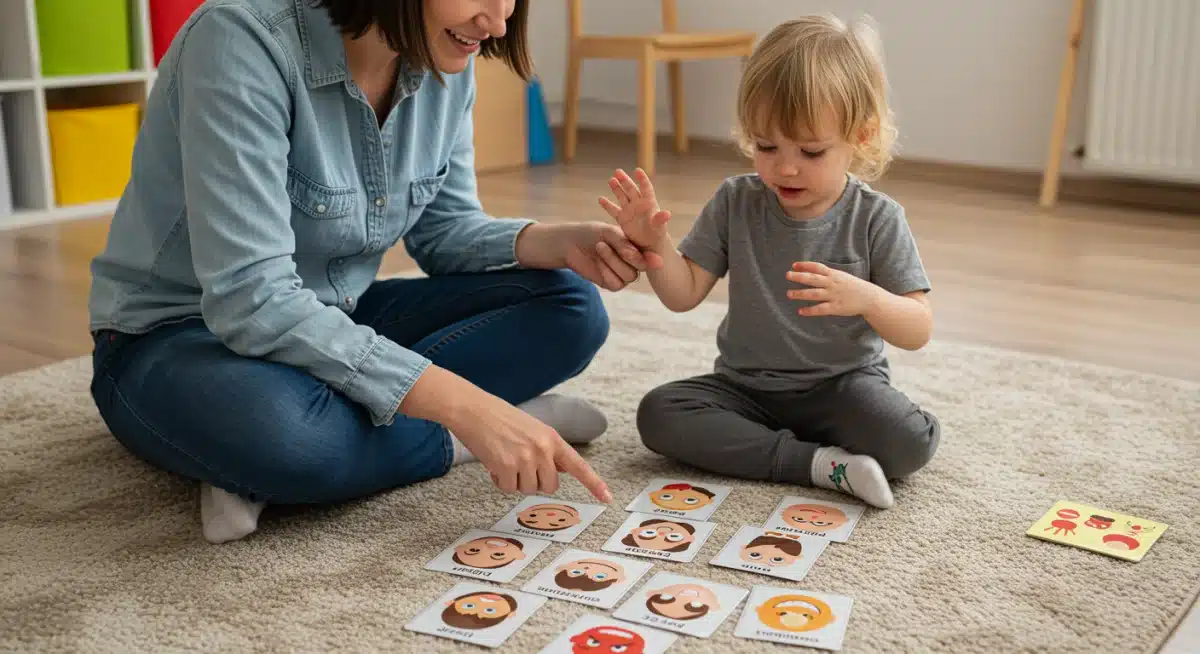
- Emotion Cards: Create or buy cards with pictures of different emotions and practice identifying them.
Consistency is key. The more often children are exposed to and encouraged to use emotion words, the more naturally they will integrate them into their understanding. This regular practice helps them build a robust emotional vocabulary, which is the foundation for more complex emotional regulation skills. By actively engaging in these recognition exercises, children begin to develop a deeper awareness of their internal states and how they manifest.
Step 2: Expressing Emotions Appropriately
Once children can recognize and name emotions, the next step is teaching them how to express these feelings in ways that are healthy and constructive. Young children often express strong emotions through physical actions like hitting, yelling, or throwing objects because they lack the verbal or self-regulation skills to do otherwise. This step focuses on guiding them towards more acceptable and effective methods of communication.
It’s vital for parents to model appropriate emotional expression. When you feel frustrated, calmly state, “I’m feeling a bit frustrated right now, so I’m going to take a deep breath.” This shows your child that all emotions are okay, but how we react to them matters. Creating a safe space where children feel comfortable sharing their feelings without judgment is paramount. Validate their emotions, even if you don’t agree with their actions.
Strategies for healthy emotional expression
- “I Feel” Statements: Teach children to say, “I feel [emotion] when [situation] because [reason].” This helps them articulate their experience.
- Calm-Down Corner: Designate a special, safe space with calming toys or books where your child can go when feeling overwhelmed.
- Deep Breathing Exercises: Introduce simple breathing techniques like “smell the flower, blow out the candle” to help regulate strong emotions.
- Drawing and Play: Encourage children to express their feelings through art or imaginative play when words are difficult.
The goal is not to suppress emotions, but to channel them productively. By teaching children a range of expression strategies, we empower them to communicate their needs and feelings effectively, fostering better relationships and reducing internal turmoil. This step is about bridging the gap between an internal emotional experience and an external, understandable communication.
Step 3: Developing Empathy and Social Awareness
Beyond understanding their own emotions, emotionally intelligent children also develop the capacity to understand and share the feelings of others—a quality known as empathy. This skill is fundamental for positive social interactions, building strong friendships, and navigating group dynamics. It involves taking another person’s perspective and recognizing how their actions might impact others.
Parents can cultivate empathy by pointing out the feelings of others in real-life situations, stories, or TV shows. Ask questions like, “How do you think your friend felt when you took their toy?” This prompts children to consider perspectives beyond their own. Role-playing different scenarios can also be incredibly effective, allowing children to step into someone else’s shoes and experience what it might feel like.
Cultivating a sense of connection
Encouraging acts of kindness and helpfulness naturally fosters empathy. When a child sees the positive impact of their actions on someone else, it reinforces the value of considering others’ feelings. Simple gestures, like sharing a snack or helping a sibling, contribute significantly to this development. It’s about making empathy a tangible and rewarding experience for them.
- Discussing Consequences: Talk about how actions affect others, both positively and negatively, in an age-appropriate way.
- Community Involvement: Engage in simple acts of service, like helping a neighbor, to broaden their understanding of community and caring.
- Diverse Storytelling: Read books featuring characters from various backgrounds and experiences to expose them to different perspectives.
Developing empathy is a continuous process that requires consistent reinforcement. By actively teaching children to consider the feelings of others, we are not only enhancing their emotional intelligence but also nurturing compassionate and socially responsible individuals. This step is crucial for moving beyond self-focused understanding to a more interconnected view of the world.
Step 4: Problem-Solving and Conflict Resolution
The final step in our plan integrates all previous emotional intelligence skills into practical application: problem-solving and conflict resolution. Life presents challenges, and equipping children with the tools to navigate disagreements and find solutions independently is a powerful aspect of emotional maturity. This stage moves beyond simply identifying emotions to actively using emotional understanding to resolve issues.
When conflicts arise, resist the urge to immediately solve them for your child. Instead, guide them through a process of identifying the problem, brainstorming solutions, and evaluating outcomes. This empowers them to become active participants in their own problem-solving. For instance, if two children are fighting over a toy, you might ask, “What’s the problem here?” then “What are some ways we could solve this?”
Guiding children through conflicts
Encourage children to express their feelings about the conflict using “I feel” statements, as learned in Step 2. This helps both parties understand each other’s perspectives. Facilitate negotiation and compromise, emphasizing that finding a solution that works for everyone is the goal. This teaches them flexibility and the importance of considering others’ needs during disagreements.
- Brainstorming Solutions: Help them think of multiple ways to solve a problem, even if some seem silly.
- Role-Playing: Practice different conflict scenarios and how to resolve them peacefully.
- Focus on Fair Outcomes: Guide them to understand what a fair resolution looks like for all involved.
- Praise Effort: Acknowledge and praise their efforts in trying to resolve conflicts, regardless of the immediate outcome.
By fostering these problem-solving skills, we are teaching children invaluable life lessons in resilience, negotiation, and peaceful coexistence. This final step ensures that their emotional understanding translates into effective action, preparing them to handle future challenges with confidence and grace. It’s the culmination of their emotional intelligence journey in early childhood.
Measuring Progress and Sustaining Growth
Within 90 days of consistently implementing this 4-step plan, you should observe measurable progress in your child’s emotional intelligence. This progress won’t necessarily be a sudden transformation, but rather a gradual increase in their ability to recognize, express, understand, and manage their emotions. Tracking this development can be motivating for both parents and children, reinforcing the effort invested.
Observable signs of progress might include a child using emotion words more frequently and accurately, fewer tantrums or more rapid recovery from emotional outbursts, showing concern for others’ feelings, or attempting to resolve minor conflicts independently. Keep a simple journal or use a checklist to note specific instances where your child demonstrates these new skills. This informal assessment provides valuable insights into their growth.
Long-term strategies for continued development
Sustaining emotional growth requires ongoing effort and adaptation. As children grow, their emotional landscape becomes more complex, and new challenges arise. Continue to be a supportive guide, providing opportunities for emotional learning and modeling healthy emotional behaviors. The principles of this 4-step plan remain relevant, evolving with your child’s developmental stages.
- Regular Check-ins: Periodically review the 4 steps and assess where your child might need more support or practice.
- Adapt Activities: Modify activities as your child matures, introducing more complex emotional scenarios and discussions.
- Read and Discuss: Continue to use books, movies, and real-life events as springboards for emotional conversations.
- Seek Resources: Don’t hesitate to consult parenting books, workshops, or professionals if you encounter persistent challenges.
The journey of building emotional intelligence is lifelong. By laying a strong foundation during the crucial years of 2-5, parents empower their children with an enduring set of skills that will serve them well throughout their lives. The 90-day progress marker is just the beginning of a continuous and rewarding developmental path, ensuring that they grow into well-adjusted, empathetic, and resilient individuals.
Common Challenges and Solutions
Even with a well-structured plan, parents might encounter various challenges when trying to foster emotional intelligence in young children. Every child is unique, and their pace of development varies, as do their temperaments. Recognizing these common hurdles and having strategies to overcome them can make the process smoother and more effective, preventing parental burnout and child frustration.
One frequent challenge is inconsistency in applying the strategies. Life gets busy, and it’s easy to fall back into old habits or to react impulsively rather than intentionally. Another common issue is dealing with particularly strong-willed or highly sensitive children who may require more tailored approaches. Understanding that setbacks are a normal part of the learning process is crucial for maintaining a positive and supportive environment.
Overcoming obstacles in emotional development
To address inconsistency, try to integrate emotional learning into daily routines. For example, make discussing feelings a part of bedtime stories or mealtime conversations. For children with intense emotions, focus heavily on Step 2 (Expressing Emotions Appropriately) by providing many different outlets and consistently validating their feelings before guiding their expression. Remember, patience is a virtue, and progress is often non-linear.
- Parental Self-Care: Ensure you are managing your own emotions effectively, as children learn by observing.
- Short, Consistent Sessions: Instead of long, infrequent lessons, opt for short, daily interactions focused on emotional skills.
- Positive Reinforcement: Heavily praise any attempt by your child to use their emotional intelligence skills, no matter how small.
- Seek Professional Guidance: If behavioral patterns are severely disruptive or persistent, consider consulting a child development specialist.
Navigating these challenges requires flexibility and a deep understanding of your child’s individual needs. By being proactive and adaptable, parents can transform potential roadblocks into opportunities for deeper learning and stronger emotional bonds. Overcoming these hurdles reinforces the child’s belief in their ability to manage complex feelings, further solidifying their emotional intelligence.
| Key Step | Brief Description |
|---|---|
| Recognizing Emotions | Help children identify and name their own feelings and those of others using words and visual cues. |
| Expressing Emotions | Teach healthy and constructive ways to communicate feelings, moving beyond physical reactions. |
| Developing Empathy | Cultivate the ability to understand and share others’ feelings, fostering social awareness and kindness. |
| Problem-Solving | Guide children to use emotional understanding to resolve conflicts and find fair solutions independently. |
Frequently Asked Questions About Emotional Intelligence in Children
Emotional intelligence in young children is crucial because it forms the bedrock for healthy social interactions, academic readiness, and overall mental well-being. It helps them manage stress, build strong relationships, and navigate life’s challenges with resilience, setting them up for success.
Begin by labeling emotions in everyday situations, using simple words like “happy,” “sad,” and “angry.” Use picture books, emotion cards, and mirrors to help them recognize facial expressions. Validate their feelings, saying, “I see you’re feeling frustrated.”
Signs of progress include using emotion words correctly, recovering from tantrums more quickly, showing empathy towards others, and attempting to resolve minor conflicts verbally instead of physically. You’ll observe a gradual increase in their self-regulation and social awareness.
While some temperament aspects are innate, emotional intelligence is largely a learned skill that can be significantly developed and strengthened through consistent teaching, modeling, and practice from early childhood. Parents play a vital role in this developmental process.
With consistent application of the 4-step plan, parents should begin to observe measurable progress within 90 days. This progress will manifest as improved emotional recognition, expression, empathy, and early conflict resolution skills in children aged 2-5.
Conclusion
Building emotional intelligence in children aged 2-5 is an investment in their lifelong well-being and success. By following this structured 4-step plan, parents can systematically nurture essential emotional skills, leading to observable progress within 90 days. From recognizing and expressing feelings to developing empathy and problem-solving abilities, each step contributes to creating well-rounded, resilient individuals. This proactive approach not only benefits the child but also strengthens family bonds and fosters a more harmonious home environment, preparing them for a future where emotional competence is as valued as intellectual acumen.