Picky Eaters: 6 Expert Tips to Expand Toddler Diets

Implementing consistent, positive mealtime strategies and offering new foods creatively can significantly expand a toddler’s dietary repertoire and reduce mealtime stress for families.
Navigating the world of toddler nutrition can often feel like a culinary battlefield, especially when faced with a picky eater. However, with the right approach and a dose of patience, it’s entirely possible to implement practical solutions for picky eaters: 6 expert tips to expand toddler diets by 25% in 2025. This guide offers actionable strategies to transform mealtime struggles into opportunities for growth and enjoyment, helping your little one embrace a wider variety of healthy foods.
Understanding the Roots of Picky Eating
Picky eating in toddlers is a common developmental phase, not usually a sign of poor parenting or a behavioral flaw. Many factors contribute to a child’s selective eating habits, ranging from innate preferences to learned behaviors.
Toddlers are often exploring their independence, and food can become an arena for asserting control. They may also be sensitive to textures, smells, or appearances of certain foods. It’s crucial for parents to understand these underlying causes to approach the situation with empathy and effective strategies.
Developmental Milestones and Food Aversions
As toddlers grow, their taste buds are still developing, and what might seem appealing to an adult can be overwhelming to a child. Neophobia, the fear of new foods, is a natural evolutionary trait designed to protect young children from potentially harmful substances. This often peaks between 18 months and 2 years.
- Sensory Sensitivity: Some toddlers are highly sensitive to the texture, smell, or even the sound food makes when chewed.
- Independence Drive: Refusing food can be a way for toddlers to exert control in a world where they have little power.
- Growth Spurts: Appetite can fluctuate significantly. During slower growth periods, a toddler might naturally eat less.
Recognizing these common developmental aspects helps parents reframe their perspective on picky eating. Instead of viewing it as defiance, understanding it as a normal stage can reduce parental stress and lead to more positive interactions at mealtime.
Tip 1: Make Mealtime a Positive Experience
The atmosphere around food plays a significant role in a child’s willingness to try new things. If mealtime is consistently stressful, filled with pressure or arguments, children are less likely to engage positively with food. Creating a calm, enjoyable environment is paramount.
Focus on interaction, conversation, and making food fun rather than a battleground. This shift in focus can dramatically alter a child’s perception of eating.
Strategies for a Stress-Free Mealtime
Positive mealtime experiences begin with setting the right tone. Avoid distractions like screens and engage your child in conversation. Even if they don’t eat much, a pleasant experience can build positive associations with food.
- Eat Together: Family meals provide opportunities for modeling good eating habits and social interaction.
- Avoid Pressure: Never force a child to eat or clean their plate. This can create negative associations and power struggles.
- Keep it Calm: Maintain a neutral and supportive tone, even if your child refuses food.
By making mealtime a time for connection and enjoyment, you reduce the pressure on your child to perform and allow them to explore food at their own pace. This relaxed approach often leads to greater openness to trying new foods over time.
Tip 2: Involve Toddlers in Food Preparation
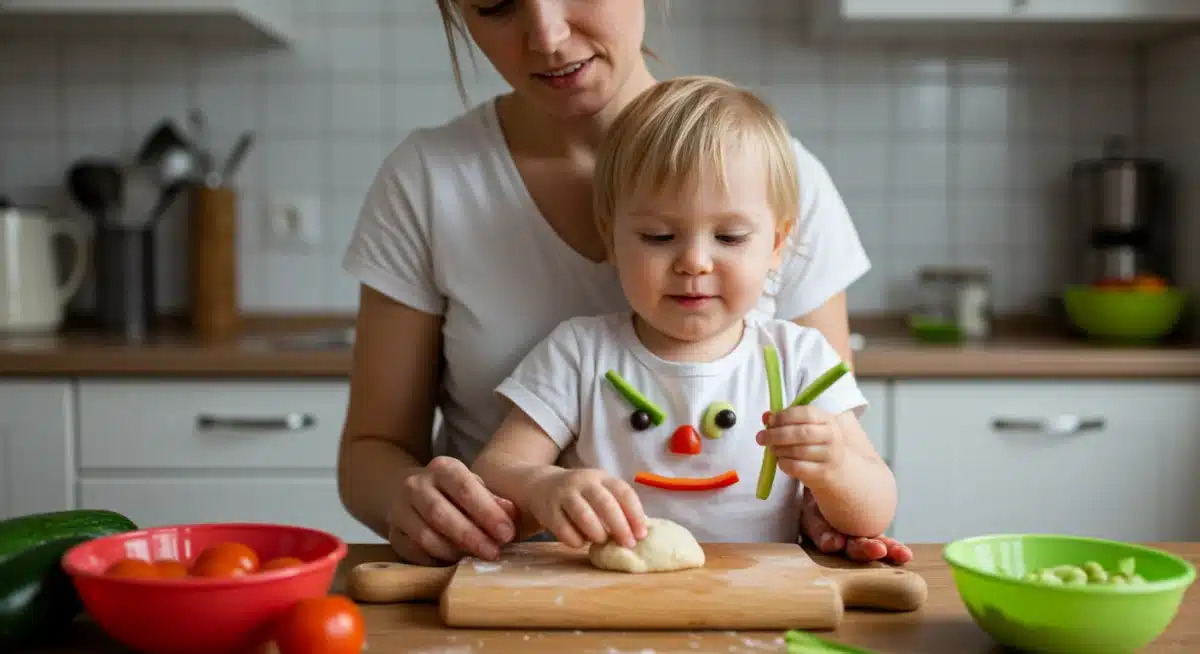
Children are more likely to eat foods they have helped prepare. Involving toddlers in the kitchen, even in small ways, gives them a sense of ownership and curiosity about what they’re eating. This hands-on experience can demystify new ingredients and make them less intimidating.
From washing vegetables to stirring ingredients, there are many age-appropriate tasks that can engage a young child and build their confidence around food.
Age-Appropriate Kitchen Tasks for Little Hands
Even the youngest toddlers can participate in simple kitchen activities. The key is to keep it safe, fun, and focused on the process rather than perfection. This involvement fosters a positive relationship with food from an early age.
- Washing produce: Let them rinse fruits and vegetables in a colander.
- Stirring: Provide a sturdy bowl and spoon for mixing dry ingredients or cold batter.
- Tearing lettuce: Small hands are great for tearing leafy greens for salads.
- Setting the table: Allows them to feel like an important part of the meal ritual.
Through active participation, toddlers gain familiarity with different foods, their textures, and their smells, making them more comfortable and adventurous eaters. It’s a powerful way to expand their dietary horizons without direct pressure.
Tip 3: Offer New Foods Strategically and Repeatedly
Introducing new foods requires patience and persistence. It can take multiple exposures—sometimes 10 to 15 or even more—before a child accepts a new food. The key is to offer new items in a low-pressure way, alongside familiar favorites.
Don’t give up after the first few attempts. Consistency is crucial in helping a toddler become comfortable with novelty.

Creative Ways to Introduce Novelty
Beyond simply placing a new food on the plate, consider creative presentation and pairing strategies. Making food visually appealing and associating it with positive experiences can significantly increase acceptance.
- “Food Chaining”: Introduce new foods that are similar in color, texture, or flavor to foods your child already likes.
- “Deconstructed Meals”: Offer components of a meal separately, allowing the child to choose and combine.
- “Dipping Fun”: Provide healthy dips (hummus, yogurt, guacamole) with new vegetables or fruits.
The goal is to gently nudge them out of their comfort zone without creating aversion. Small, consistent exposures over time will build familiarity and acceptance, leading to a broader and more varied diet.
Tip 4: Model Healthy Eating Habits
Children are keen observers, and they learn a great deal by watching their parents and caregivers. If parents demonstrate enjoyment of a wide variety of healthy foods, children are more likely to emulate that behavior. Your plate is often your child’s first reference point for what’s considered ‘normal’ to eat.
This isn’t about perfection, but about consistency in showing a positive relationship with food. Eating mindfully and enjoying diverse meals yourself sets a powerful example.
The Power of Parental Influence at the Table
Mealtime is a prime opportunity for parents to model healthy eating. When children see their parents enjoying various foods, they are more inclined to try them. This goes beyond just eating; it includes talking positively about food and demonstrating good table manners.
- Eat What You Serve: Ensure your plate mirrors what you’re offering your child, especially new foods.
- Express Enjoyment: Talk about how delicious or nutritious foods are in a positive, non-pressuring way.
- Avoid Negative Talk: Refrain from criticizing foods or expressing dislikes in front of your child.
By consistently modeling a healthy and adventurous approach to eating, you provide a strong foundation for your child’s own dietary habits. This indirect teaching is often more effective than direct instruction or coercion.
Tip 5: Establish a Consistent Meal and Snack Routine
Toddlers thrive on routine and predictability, and meal and snack times are no exception. Establishing a consistent schedule helps regulate their appetite, preventing them from becoming overly hungry or too full between meals. This structure reduces grazing and encourages them to eat more substantial meals.
A predictable schedule also signals to a child when food will be available, reducing anxiety and making them more receptive to eating at designated times.
Benefits of a Structured Eating Schedule
A consistent routine not only helps with appetite regulation but also instills healthy eating patterns. When children know when to expect food, they are less likely to demand snacks constantly and are more likely to be genuinely hungry at meal times.
- Predictable Hunger: Helps children understand their hunger cues and eat when truly hungry.
- Reduced Grazing: Limits constant snacking, which can diminish appetite for main meals.
- Better Digestion: Regular eating times can support healthy digestive patterns.
By creating a structured eating environment, parents can help their toddlers develop a healthier relationship with food, ensuring they get the nutrients they need while also reducing mealtime conflicts. This routine provides a sense of security and control for the child.
Tip 6: Embrace the Division of Responsibility
One of the most impactful strategies for feeding children is the ‘Division of Responsibility’ concept, developed by Ellyn Satter. This approach clearly delineates the roles of parents and children at mealtime, reducing power struggles and fostering trust.
Parents are responsible for what, when, and where food is offered, while the child is responsible for whether and how much they eat. This framework empowers children to listen to their own bodies while ensuring they are exposed to nutritious options.
Implementing the Division of Responsibility Effectively
Putting the Division of Responsibility into practice requires trust in your child’s innate ability to regulate their food intake. It means letting go of the need to control every bite and focusing on providing a supportive eating environment.
- Parent’s Role: Choose and prepare the food, offer meals and snacks at regular times, and provide a pleasant eating environment.
- Child’s Role: Decide if they will eat, and how much they will eat from what is offered.
- Trust: Trust that your child knows how much they need to eat to be satisfied and grow appropriately.
By adhering to this division, parents can significantly reduce mealtime stress and allow children to develop a healthy, intuitive relationship with food. It shifts the focus from ‘getting them to eat’ to ‘providing opportunities to eat well,’ which is a more sustainable and positive approach in the long run.
| Key Strategy | Brief Description |
|---|---|
| Positive Mealtime | Create a calm, enjoyable environment without pressure to eat. |
| Involve in Prep | Let toddlers help prepare food to foster curiosity and ownership. |
| Strategic Exposure | Repeatedly offer new foods alongside favorites in low-pressure ways. |
| Division of Responsibility | Parents offer food, children decide if and how much to eat. |
Frequently Asked Questions About Picky Eaters
Yes, picky eating is a very common developmental stage for toddlers, often peaking between 18 months and 2 years. It’s usually a normal part of their growth and exploration of independence, rather than a cause for significant concern. Patience and consistent positive strategies are key.
It can take a significant number of exposures, sometimes 10 to 15 or even more, before a child accepts a new food. Don’t get discouraged if they refuse it initially. Consistency in offering new items without pressure is more important than immediate acceptance.
No, forcing a toddler to eat or clean their plate is generally counterproductive. It can create negative associations with food and lead to power struggles, increasing mealtime stress. Instead, focus on providing healthy options and allowing your child to decide how much they want to eat.
Developed by Ellyn Satter, this principle states that parents are responsible for what, when, and where food is offered, while the child is responsible for whether and how much they eat. It fosters trust and helps children develop intuitive eating habits.
Create a positive, calm mealtime environment by eating together, avoiding distractions like screens, and refraining from pressure. Involve your toddler in food preparation, and model healthy eating habits yourself. Focus on connection over consumption to reduce stress.
Conclusion
Addressing picky eating in toddlers requires a blend of understanding, patience, and strategic action. By implementing these six expert tips—fostering positive mealtime experiences, involving children in food preparation, offering new foods strategically, modeling healthy habits, maintaining consistent routines, and embracing the Division of Responsibility—parents can significantly expand their toddler’s diet. Remember, progress is often gradual, and consistency is far more effective than coercion. With these practical solutions, you can help your child develop a healthier, more adventurous relationship with food, paving the way for improved nutrition and more harmonious family mealtimes in the years to come.