2026 Screen Time for Toddlers: Recommendations & Conflict Reduction

The 2026 screen time recommendations for toddlers emphasize quality over quantity, advocating for interactive, educational content and parental involvement to foster healthy digital habits and significantly reduce familial conflict around device use.
The landscape of early childhood development is constantly evolving, especially concerning technology. Understanding the latest 2026 screen time recommendations for toddlers is crucial for parents aiming to navigate the digital world effectively while fostering healthy growth and reducing daily conflicts by a significant margin.
Understanding the Evolving Landscape of Toddler Screen Time in 2026
The digital age has irrevocably changed how children grow up, and for parents of toddlers, this often brings a unique set of challenges and questions. The year 2026 marks a significant shift in how we perceive and manage screen time for our youngest family members, moving beyond mere time limits to a more nuanced understanding of content quality and interactive engagement. Experts are increasingly emphasizing that not all screen time is created equal, urging parents to focus on the “what” and “how” rather than just the “how much.”
This evolving perspective is driven by new research highlighting the profound impact of early digital experiences on cognitive, social, and emotional development. While excessive, passive screen use can indeed be detrimental, carefully curated, interactive, and educational content, particularly when co-viewed with a parent, can offer surprising benefits. This section explores the foundational changes in the 2026 recommendations, setting the stage for more practical strategies.
Shifting Focus from Quantity to Quality
Traditional screen time guidelines often centered on strict hourly limits. However, 2026 recommendations acknowledge that a blanket approach overlooks critical distinctions between various forms of digital engagement. A 30-minute video call with grandparents, for instance, offers vastly different developmental benefits than 30 minutes of passive, fast-paced cartoons. The new guidelines encourage parents to evaluate content based on its educational value, interactivity, and whether it promotes active learning or creative play.
- Interactive Learning: Prioritize apps and programs that require active participation from the child, such as problem-solving games or creative drawing tools.
- Educational Content: Seek out media designed to teach letters, numbers, shapes, or social-emotional skills in an age-appropriate manner.
- Co-viewing Opportunities: Screens become a tool for connection when parents engage with their toddlers, discussing the content and reinforcing learning.
The shift also recognizes that context matters. Screen time used to calm a distressed child during a medical procedure is different from using it as a default babysitter. Understanding these nuances empowers parents to make informed decisions that align with their family’s values and a child’s individual needs. This holistic view helps to reduce the guilt often associated with screen use and fosters a more balanced approach.
The Role of Parental Involvement
Perhaps the most significant update in the 2026 recommendations is the heightened emphasis on parental involvement. It’s no longer enough to simply select appropriate content; active participation from parents is considered a cornerstone of healthy digital habits. Co-viewing, co-playing, and discussing what’s on the screen transform a potentially isolating activity into a shared learning experience. This interaction helps toddlers make sense of what they’re seeing, enriching their vocabulary and critical thinking skills.
Parents are encouraged to use screen time as a springboard for real-world activities. For example, if a toddler watches a show about animals, parents can follow up with a trip to the zoo or read books about the same animals. This integration helps bridge the gap between the digital and physical worlds, ensuring that screen experiences contribute positively to overall development. The goal is to make screen time an enhancement, not a replacement, for other vital developmental activities.
Setting Realistic Boundaries: The 2026 Approach to Time Limits
While the focus has shifted from strict quantity to quality, the 2026 recommendations don’t entirely abandon the concept of time limits. Instead, they advocate for a more flexible, individualized approach that considers a toddler’s age, developmental stage, and temperament. The aim is to establish realistic and sustainable boundaries that prevent overuse while allowing for the benefits of well-chosen digital experiences.
For toddlers aged 18-24 months, the guidelines suggest avoiding solo screen time altogether, reserving it for video chats with family or co-viewing with a parent for very short periods. For children aged 2-5 years, the recommendation is generally no more than one hour per day of high-quality programming, always with parental involvement. These are not rigid rules but rather flexible benchmarks to guide parents in creating a balanced routine.
Crafting a Flexible Screen Time Schedule
Creating a schedule that works for your family is paramount. This isn’t about enforcing a rigid timetable but rather establishing predictable patterns that toddlers can understand and adapt to. A flexible schedule helps toddlers anticipate when screen time will occur and, crucially, when it will end, which can significantly reduce resistance and conflict. Consider integrating screen time into daily routines, such as during a quiet winding-down period before naptime or as a brief, shared activity after a meal.
- Predictable Slots: designate specific, short periods for screen use, such as 15-20 minutes after breakfast or before a quiet activity.
- Visual Cues: Use visual timers or simple picture schedules to help toddlers understand when screen time is about to begin and end.
- Transition Activities: Plan a fun, engaging activity immediately following screen time to smoothly transition children away from devices.
The key to success lies in consistency and clear communication. Even young toddlers can begin to understand simple rules when they are consistently applied. Explaining why screen time is ending (e.g., “Now it’s time to play with blocks!”) rather than just taking the device away can help mitigate frustration and build their understanding of boundaries. This proactive approach minimizes power struggles and promotes a sense of security.
Individualizing Screen Time for Each Toddler
Every child is unique, and what works for one toddler may not work for another. The 2026 recommendations strongly advocate for an individualized approach to screen time. Some toddlers may be more sensitive to overstimulation, while others thrive on interactive learning apps. Parents are encouraged to observe their child’s reactions to different types of content and duration, adjusting boundaries accordingly. If a child becomes irritable, has trouble sleeping, or shows behavioral changes after screen time, it’s a clear signal to reassess the current approach.
Consider your toddler’s overall daily routine. Are they getting enough physical activity, outdoor play, social interaction, and unstructured playtime? Screen time should complement, not detract from, these essential developmental experiences. By tailoring screen time to your child’s specific needs and your family’s lifestyle, you can create a healthier and more harmonious balance.
Insider Tips to Reduce Screen Time Conflict by 30%
One of the biggest struggles parents face is the inevitable conflict that arises when it’s time to turn off devices. The 2026 guidelines offer practical, research-backed strategies designed to reduce these power struggles by up to 30%, fostering a more cooperative environment. These insider tips focus on proactive communication, consistent routines, and empowering toddlers with a sense of control.
The goal isn’t just to manage screen time but to teach children healthy self-regulation skills that will serve them well into adulthood. By implementing these strategies, parents can transform a common source of tension into an opportunity for growth and understanding, making family life more peaceful and enjoyable. This section delves into actionable techniques that yield tangible results.
Implementing Clear and Consistent Rules
Toddlers thrive on predictability. Establishing clear, consistent rules around screen time is fundamental to reducing conflict. These rules should be simple, easy to understand, and communicated regularly. For example, instead of a vague “no more screen time,” try “when the timer rings, screen time is done, and then we’ll read a book.”
- “First/Then” Statements: Frame screen time as a reward or a stepping stone to another activity (e.g., “First we finish our vegetables, then we can watch one episode”).
- Visual Timers: Use an analog timer or a visual countdown app to help toddlers see how much time is left, giving them a sense of control and predictability.
- Family Media Plan: Create a simple family media plan together, even involving older siblings, to set expectations for everyone’s device use.
Consistency is key. If rules are sometimes enforced and sometimes not, toddlers become confused and are more likely to push boundaries. When you set a rule, stick to it. This doesn’t mean being inflexible, but rather being predictable in your responses. Over time, toddlers learn to accept these boundaries, leading to fewer arguments and smoother transitions.
Empowering Toddlers with Choices and Control
Toddlers are naturally driven by a desire for autonomy. Offering limited choices within the established screen time framework can significantly reduce resistance. When children feel they have some say in the matter, they are more likely to cooperate. This isn’t about letting them dictate screen time, but rather giving them agency within safe boundaries.
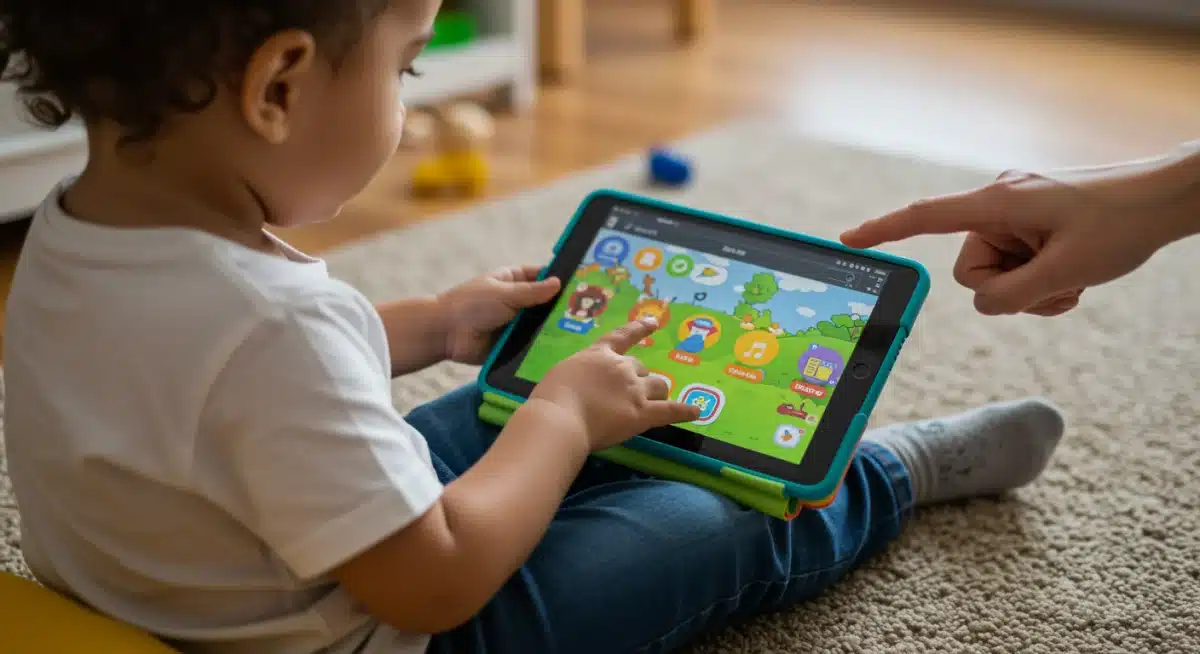
For example, instead of announcing, “No more TV,” try, “Would you like to watch the animal show or the building show for your 15 minutes of screen time?” Or, when screen time is ending, “Would you like to put the tablet away yourself, or would you like me to help you?” These small choices can make a big difference in a toddler’s willingness to transition away from devices.
Involving toddlers in the decision-making process, even in small ways, fosters a sense of respect and partnership. It teaches them about responsibility and self-management, crucial skills for navigating a world filled with digital distractions. This approach not only reduces immediate conflict but also contributes to their long-term emotional intelligence.
The Importance of “Off-Screen” Activities for Toddler Development
While managing screen time effectively is important, it’s equally vital to ensure that toddlers have ample opportunities for rich, varied off-screen experiences. The 2026 recommendations underscore the foundational role of play, exploration, and social interaction in healthy development. These activities build critical skills that screens simply cannot replicate, forming the bedrock of a child’s cognitive, physical, and social growth.
Prioritizing off-screen activities isn’t about demonizing technology; it’s about recognizing the irreplaceable value of hands-on learning, imaginative play, and direct human connection. When these foundational experiences are robust, screen time can be a complementary tool rather than a dominant force in a child’s life. This section highlights the crucial balance between digital and real-world engagement.
Encouraging Unstructured Play and Exploration
Unstructured play is perhaps the most powerful tool for toddler development. It allows children to explore their world at their own pace, experiment with ideas, and develop creativity and problem-solving skills. Unlike structured activities, unstructured play has no specific agenda, allowing children to follow their own interests and build confidence through self-directed discovery. This includes everything from building with blocks to playing in a sandbox or simply exploring the backyard.
- Open-Ended Toys: Provide toys that encourage imagination, such as blocks, art supplies, dress-up clothes, or puppets, rather than toys with a single function.
- Outdoor Adventures: Make outdoor play a daily priority, allowing toddlers to run, climb, explore nature, and develop gross motor skills.
- Sensory Play: Engage in activities that stimulate the senses, like playing with play-doh, water tables, or sand, which are crucial for cognitive development.
These experiences are essential for developing executive functions, language skills, and social-emotional intelligence. When toddlers are given the freedom to play without constant adult direction, they learn to self-regulate, negotiate, and adapt—skills that are increasingly important in a complex world. Protecting time for unstructured play is a direct investment in a child’s holistic well-being.
Fostering Social Interaction and Language Development
Direct social interaction with caregivers and peers is paramount for language acquisition and social-emotional development. Toddlers learn to communicate, understand emotions, and build relationships through face-to-face interactions, not through screens. The 2026 guidelines emphasize creating ample opportunities for these crucial exchanges.
Reading together, engaging in conversations, singing songs, and facilitating playdates are all vital activities that promote robust language development and social skills. Even during shared screen time, turning it into a conversational experience by asking questions and discussing the content amplifies its benefits. The richness of human interaction cannot be replicated by any digital device, making it a non-negotiable component of healthy toddlerhood.
Navigating Parental Worries and Guilt: A 2026 Perspective
Parenting in the digital age often comes with a heavy dose of worry and guilt, especially concerning screen time. Are we doing enough? Are we doing too much? The 2026 recommendations acknowledge these parental anxieties and offer a more compassionate, practical framework for navigating them. The goal is to empower parents with confidence, reducing self-blame and fostering a more positive approach to technology in the family.
It’s important to remember that perfection is unattainable, and every family’s circumstances are different. The guidelines serve as a compass, not a rigid map. This section aims to alleviate common parental concerns, offering reassurance and actionable strategies to manage the emotional burden often associated with screen time decisions. Embracing flexibility and self-compassion is key to long-term success.
Managing the Pressure of Modern Parenting
Modern parents face immense pressure from various sources: social media, well-meaning relatives, and often, their own internal expectations. The constant influx of information, sometimes conflicting, can lead to decision fatigue and self-doubt. When it comes to screen time, this pressure is amplified by the pervasive nature of technology in daily life. It’s crucial for parents to recognize and validate these feelings.
Instead of striving for an elusive ideal, focus on what is sustainable and healthy for your unique family. Prioritize your child’s overall well-being, which includes a loving, responsive parenting environment, rather than obsessing over every minute of screen exposure. Remember that your presence and engagement are far more influential than perfect adherence to abstract guidelines.
Seeking Support and Reliable Information
No parent has all the answers, and seeking support is a sign of strength, not weakness. Connect with other parents, join parenting groups, or consult with pediatricians and child development specialists. Sharing experiences and strategies can provide valuable insights and reduce feelings of isolation. Furthermore, rely on reputable sources for information, such as pediatric organizations and trusted educational institutions, to avoid misinformation.
The 2026 recommendations are informed by the latest research, offering a reliable foundation for your decisions. By staying informed and connected, parents can feel more confident in their choices, knowing they are making the best possible decisions for their toddlers based on current expert advice. This proactive approach helps to transform worry into informed action.
Leveraging Technology for Positive Developmental Outcomes
While caution is often the watchword with toddler screen time, the 2026 recommendations also highlight the potential for technology to be a powerful tool for positive developmental outcomes when used intentionally and appropriately. It’s not about eliminating screens entirely, but about harnessing their potential to support learning, creativity, and connection in ways that were previously unimaginable. This perspective encourages parents to view technology as an ally, not just a challenge.
By carefully selecting content and actively participating in their child’s digital journey, parents can unlock opportunities for enriched learning experiences. This section explores how to strategically integrate technology to enhance, rather than hinder, a toddler’s growth, showcasing the beneficial side of digital engagement. The key is mindful and purposeful use.
Curating High-Quality Educational Content
The market is flooded with apps and shows, but not all are created equal. The 2026 guidelines emphasize the importance of curating high-quality educational content that aligns with a toddler’s developmental stage and learning goals. Look for content that is interactive, slow-paced, and free from excessive distractions or commercialism. Many reputable organizations offer curated lists of age-appropriate apps and programs.
- Interactive Apps: Choose apps that encourage toddlers to tap, drag, or speak, promoting active engagement rather than passive viewing.
- Story-Based Media: Opt for shows or apps that tell simple stories, helping with narrative comprehension and language development.
- Creative Tools: Explore digital art programs or music creation apps that allow toddlers to express themselves creatively.
Reviewing content beforehand is a critical step. Watch a show or try an app yourself to ensure it meets your standards for educational value and appropriateness. Engaging with content that supports learning objectives, like letter recognition or problem-solving, can transform screen time into a valuable educational experience. This proactive selection process is a cornerstone of positive digital hygiene.
Utilizing Screens for Connection and Learning
Technology can be a wonderful tool for connecting with distant family members or for shared learning experiences within the home. Video calls with grandparents, for example, offer invaluable social interaction. Similarly, co-viewing an educational documentary about animals can spark conversations and curiosity, leading to further exploration through books or real-world visits. The emphasis here is on shared experiences that strengthen bonds and expand knowledge.
Moreover, certain technologies can be used to document and share a child’s learning journey, such as taking photos or videos of their creations in a digital art app. These shared moments can become cherished memories and serve as prompts for further discussion and reflection. When used mindfully, technology can amplify connection and learning, making it a positive force in a toddler’s development.
Long-Term Digital Well-being: Building Foundations for the Future
Establishing healthy screen time habits during the toddler years lays a crucial foundation for long-term digital well-being. The 2026 recommendations are not just about immediate conflict reduction; they are about equipping children with the skills and understanding necessary to navigate an increasingly digital world responsibly as they grow. This forward-thinking approach focuses on teaching self-regulation, critical thinking, and a balanced relationship with technology.
By instilling these habits early, parents can help their children develop a healthy appreciation for technology’s benefits while being mindful of its potential drawbacks. This section emphasizes the proactive steps parents can take now to ensure their toddlers become digitally literate, responsible, and well-adjusted individuals in the years to come. It’s an investment in their future.
Fostering Media Literacy from an Early Age
Even toddlers can begin to develop foundational media literacy skills. This involves helping them understand that what they see on a screen is not always real, that advertisements are designed to sell things, and that different types of content serve different purposes. These early lessons are best taught through simple conversations during co-viewing experiences.
- Discussing Characters: Talk about the characters’ emotions and actions, helping toddlers understand narrative and empathy.
- Identifying Reality vs. Fiction: Point out differences between animated characters and real-life animals or people.
- Explaining Ads (Simply): For older toddlers, briefly explain that some content is designed to make people want to buy things, in very simple terms.
As children grow, these foundational skills will evolve into more sophisticated critical thinking about digital content. By starting early, parents can empower their children to be discerning consumers of media, rather than passive recipients. This proactive approach is vital in an era of abundant and often unvetted digital information.
Modeling Healthy Digital Habits as Parents
Children learn best by example. Parents are the primary role models for their toddlers, and their own digital habits significantly influence how children perceive and use technology. The 2026 recommendations subtly encourage parents to reflect on their own screen use, recognizing that modeling balanced behavior is one of the most effective teaching tools.
This means being mindful of your own phone use during family time, putting devices away during meals, and engaging in “digital detoxes” as a family. When children see their parents enjoying off-screen activities, reading books, or engaging in face-to-face conversations, they internalize the value of these experiences. Modeling a balanced approach to technology is perhaps the most powerful way to set your toddler up for long-term digital well-being.
| Key Point | Brief Description |
|---|---|
| Quality Over Quantity | Focus on interactive, educational content and parental co-viewing, rather than just strict time limits. |
| Parental Involvement | Active engagement during screen time significantly enhances learning and connection for toddlers. |
| Reduce Conflict by 30% | Implement clear rules, visual timers, and offer choices to empower toddlers and smooth transitions. |
| Prioritize Off-Screen Play | Ensure ample time for unstructured play, social interaction, and outdoor exploration for holistic development. |
Frequently Asked Questions About 2026 Toddler Screen Time
The core change shifts focus from strict time limits to content quality and parental involvement. Recommendations emphasize interactive, educational content co-viewed with a parent, moving away from passive consumption for toddlers aged 18-24 months and limiting 2-5 year olds to one hour daily of high-quality, supervised content.
To reduce conflicts, establish clear, consistent rules using visual timers and “first/then” statements. Empower your toddler by offering limited choices, such as selecting which educational app to use or deciding who puts the tablet away. This fosters cooperation and predictability, easing transitions.
No, not all screen time is inherently bad. The 2026 recommendations highlight that high-quality, age-appropriate, and interactive educational content can offer benefits, especially when parents co-view and engage with their toddlers. Video calls with family members are also generally considered positive for social connection.
Recommended content includes interactive apps that promote active learning, educational shows teaching basic concepts, and media that encourages creative expression. Content should be slow-paced, free from excessive distractions, and ideally co-viewed with a parent to facilitate discussion and reinforce learning, transforming it into a shared experience.
Parental involvement is crucial; co-viewing and discussing screen content helps toddlers process information, build vocabulary, and develop critical thinking. It transforms passive viewing into an interactive learning opportunity, strengthening parent-child bonds and bridging digital experiences with real-world understanding, ultimately maximizing developmental benefits.
Conclusion
Navigating the latest 2026 screen time recommendations for toddlers may seem daunting, but the core message is one of balance, quality, and active engagement. By shifting our focus from rigid time limits to the nature of the content and our involvement as parents, we can transform screen time from a source of conflict into a valuable tool for learning and connection. Implementing clear boundaries, offering choices, and prioritizing rich off-screen experiences are key strategies to foster healthy digital habits and significantly reduce familial tension. Ultimately, empowering our toddlers with a balanced relationship with technology, guided by informed and compassionate parenting, sets them on a path for lifelong digital well-being.